The Hype Is Gone: What A City Can Teach Us About Global Climate Debates
By Fernanda Rebelato, 2025-2026 Aronson Scholar
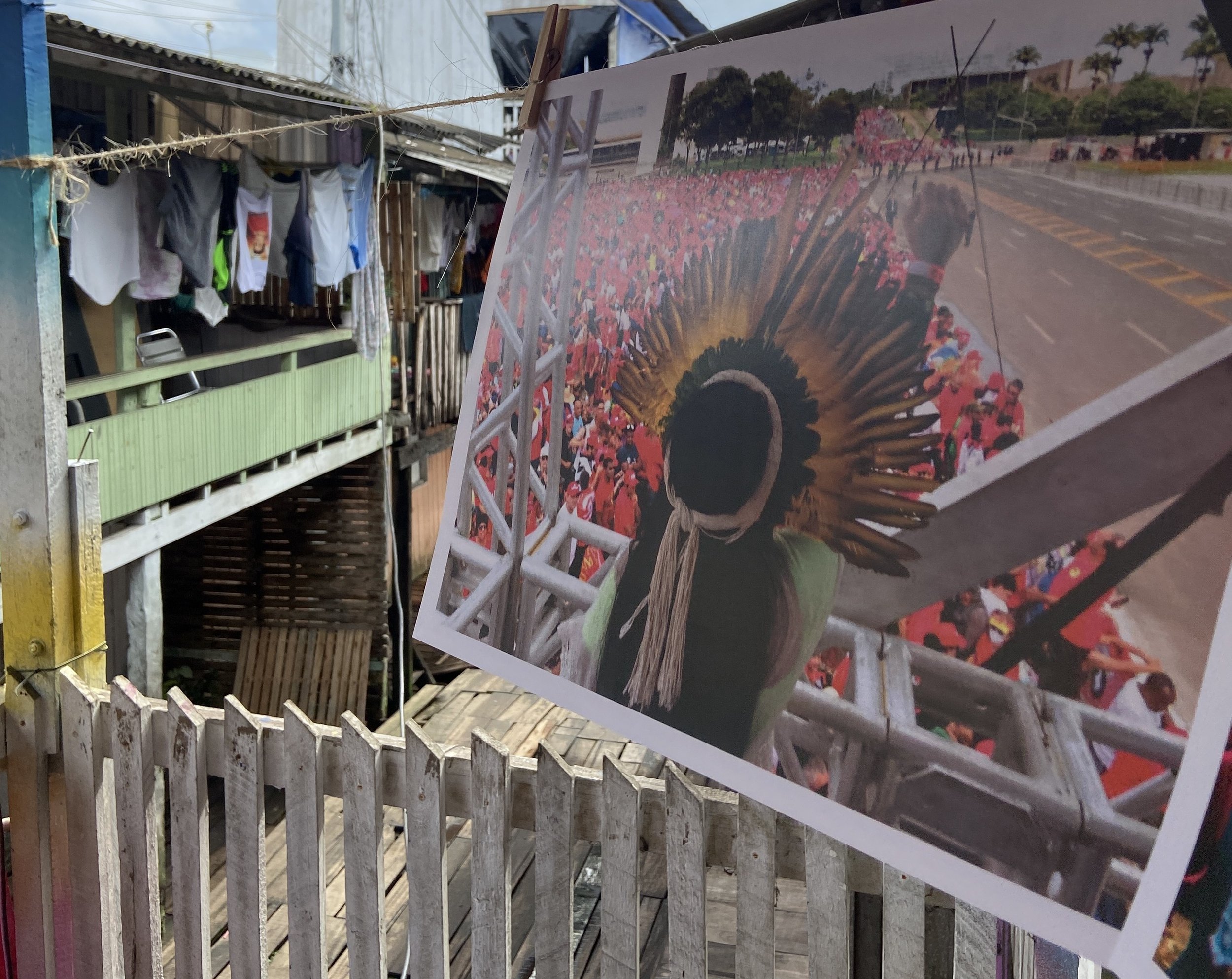
Credits: Photography exhibition at Beco do Carmo, a riverside community in Belém do Pará. Image by the author.
The Conferences of the Parties - the COP - of the United Nations Framework Convention on Climate Change (UNFCCC) began in 1995 as a negotiation mechanism between states. Over three decades, it has expanded considerably. COP is still, mainly, a negotiation between governments. But it has also become the largest annual event in the climate space, with all the logics of scale, access, and visibility that it implies.
The architecture of a COP has become large and complex. The formal negotiation process organized by the UNFCCC remains at the center, but other issues such as logistical infrastructure, host country’s national contributions, symbolic and political weight of the event, all have grown with it. Today, each edition mobilizes a vast ecosystem of civil society organizations, social movements, international funders, academics, private sector actors and journalists, all converging on a single place with their own agendas, resources, and timelines. Around the official structure, a parallel ecosystem fills the side events and green zones. The event has grown far beyond what was originally conceived, but the core logics of who controls access, who sets the agenda, and whose knowledge enters the formal record have remained largely unchanged.
These logics are not neutral. They carry the same structures that organize international development more broadly: where resources flow, who holds decision-making power, and whose knowledge counts as expertise. When a COP lands in a city, it arrives with those structures, and the way it interacts with local communities can make many inequalities visible.
On November 10, 2025, Belém do Pará hosted the opening of COP30. The choice was symbolic: a city at the heart of the Amazon biome, in a democratic country with a progressive government, after three consecutive editions in authoritarian states. Belém is also a city with one of the lowest basic sanitation rates in Brazil, with infrastructure deficits accumulated over decades, and with communities whose livelihoods are built on the very ecosystems being debated inside the convention center.
This combination made Belém a particularly interesting case for what global climate events actually do when they land on a territory. Not limited to formal negotiations, but in the months before and after: in how resources arrived and where they went, which organizations got a seat at which table, in what the city was asked to become for ten days and what it went back to being on day eleven.
The first point to note was the city: the infrastructure built for COP30 in Belém was widely described as cosmetic. One of the main examples was Vila da Barca, a community adjacent to the main convention center, which received untreated construction sewage that was denounced as environmental racism by community organizations. Funding was used to prepare infrastructure for visitors but not to leave the city better for its residents.
A second aspect is funding: money arrived, but on the conference’s terms. Short cycles, oriented around the event rather than the territory’s needs. Large delegations arrived with small budgets left for local action. A visible case where financing was available but there was a lack of political will to pursue long-term projects.
As a third note, it is important to recognize that civil society in Belém was already organized before COP30. The conference accelerated existing coalitions and created new civil society articulations, like Comitê COP30, but it also stressed them. Those closest to the affected territories faced the highest barriers to entry. And for some organizations, participation required learning an entirely new vocabulary, questioning what is lost in the translation of years of work on social mobilization and rights into the technical language of climate finance.
Finally, a fourth point was the gaze: before the delegations arrived, the questions being asked of Belém were about logistics. The communities most affected by the climate question, and by the construction that made the event possible, were the most systematically excluded from its official spaces. Being seen, being photographed, being invited to a panel does not mean setting the terms of discussion.
For a brief period, Belém and the Amazon were framed as the center of the world’s climate debate. Organizations were consulted, in some cases funded, in many cases photographed. And then the decisions about how resources flow, whose knowledge counts as expertise, and which issues enter the formal negotiation continue to be made by the same structures that have always held them.
COP31 is already being organized. The cycle moves fast as the climate emergency requires. Belém’s case can, however, be a learning point for the future. How communities organized, contested, refused certain funders, built new coalitions, and kept their doors open to the communities they serve.
What this debate tries to hold are not only questions about Belém. They are questions about how global climate dialogues are organized, and whether the way they persist is part of the problems we are trying to solve.
The full discussion can be found in the report The Hype is Gone: COP30, Civil Society and the View from Belém, available in English and Portuguese. It includes five interviewee profiles and a detailed analysis.
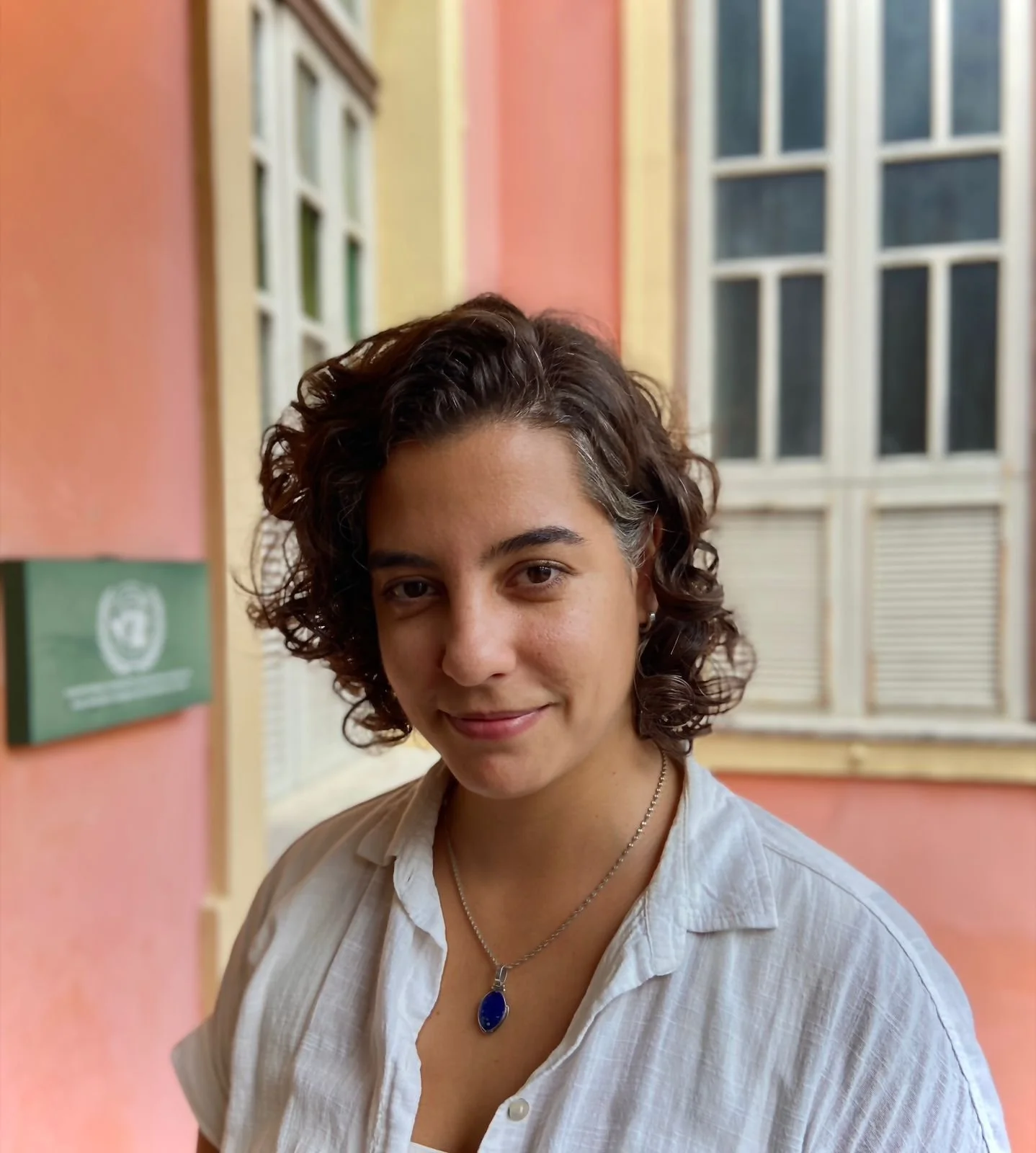
Photo of Fernanda by Lali Mareco
Fernanda Rebelato is a 2025-2026 Aronson Scholar. She graduated in Spring 2026 from the International Affairs MA at The New School. The report is an overview of her fellowship research, carried out in Belém do Pará, Brazil, in collaboration with five women civil society leaders whose organizations have been active in the territory since before COP30.