
What We Do Next Matters: This Moment Calls on Us to Act & Organize
By Dr. Ana Isabel Baptista, Associate Professor of Environmental & Climate Justice at Parsons School of Design, and Director of Tishman Environment & Design Center at The New School
The midterm elections sent a sweeping message to elected officials: people want to take back control of our democracy and build a government of and by the people. This historic sentiment rippled across the country, from the U.S. Congress to record-making gubernatorial and mayoral elections. These victories reflect the persistent organizing of frontline leaders who have continued to hold the line. We owe a debt of gratitude to these generations of organizers, who helped set the stage for this political momentum. People voted to break with the “business as usual” capture of our political system by fossil fuel industries and tech billionaires, and embrace a more progressive, populist vision of how to make life better for all people. These demands are not new; they have always been at the heart of what communities on the frontlines of pollution and climate disasters have fought for: clean air and water, healthy food, affordable and safe homes, and places to play, pray, and work in thriving communities.
Two years ago, many of our partners in higher education and environmental justice communities experienced firsthand the devastating rollback of federal funding and basic protections that held the promise of long-overdue investments in overburdened communities. As we witnessed many sectors turn away from ambitious climate and environmental justice agendas while communities faced a barrage of threats, the Tishman Environment and Design Center remained committed to trusted partnerships and efforts to build our collective power. Through our Centering Justice Symposia in Tucson (2025) and Los Angeles (2026), our Community of Practice, consisting of peer higher education centers committed to environmental and climate justice, national Fellowship program, and cumulative impacts research, we continued to support one another and our beloved communities. Despite limited resources and waning cache, our relationships endured, serving as a backbone against the headwinds.
Over the last year, one key partnership has been the National People’s Hearings, led by former members of the White House Environmental Justice Advisory Council, now the People’s EJ Advisory Council (PEJAC). Our Center helped seed the effort with PEJAC leaders and has been documenting the testimony of extraordinary people fighting for healthier, safer, more just communities. Across seven hearings, with representatives from over 40 states, we witnessed people struggling against great odds to take back control of their communities and futures. These testimonies were windows into rising discontent across the U.S. and the backlash against insider politics that left so many communities feeling forgotten and discounted. The midterm election results, from the hyper-local to the national, reflected these sentiments. These are precisely the times that call for deeper practice, technical support, thought partnership, and movement capacity to reimagine and scale what is possible.
Having witnessed hundreds of people testify, we feel a deep responsibility to act and to be accountable for our part in moving toward that change. How can our Center, and our peers across higher education and in the intermediary sector, respond to the call to action that this moment presents? At the Tishman Center, we are committed to nurturing our communities of practice, reaching across sectors and movements to build collective power, and amplifying and resourcing our movement partners’ capacity to implement change at all scales of policy and government.
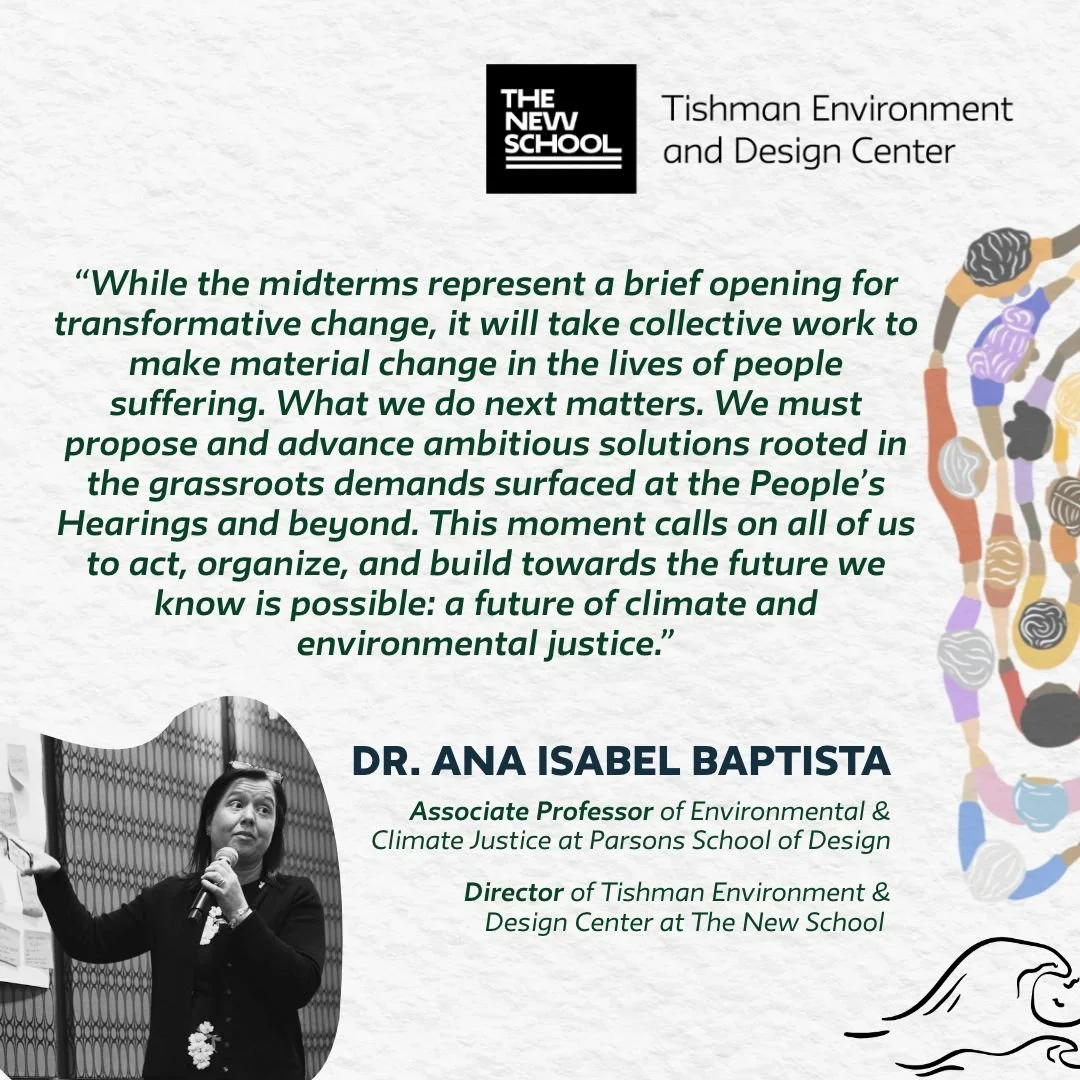
While the midterms represent a brief opening for transformative change, it will take collective work to make material change in the lives of people suffering. What we do next matters. We must propose and advance ambitious solutions rooted in the grassroots demands surfaced at the People’s Hearings and beyond. This moment calls on all of us to act, organize, and build towards the future we know is possible: a future of climate and environmental justice.
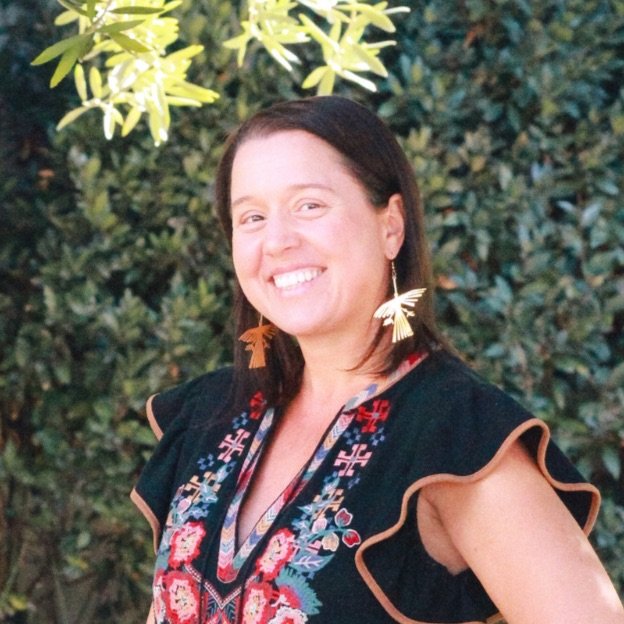
Dr. Ana Isabel Baptista is an Associate Professor of Environmental & Climate Justice and the Director of the Tishman Environment and Design Center at The New School.
Dr. Baptista’s research and practice focus on collaborative partnerships with environmental and climate justice movements. She has published extensively on cumulative impacts policies, equitable climate mitigation and clean energy policies as well as local land use practices that foster environmental justice. She has led efforts to pass landmark environmental justice legislation in her home state of New Jersey and is supporting frontline communities across the country in their efforts to secure similar wins. Ana is the principal investigator on several initiatives at the Tishman Center including the Environmental Justice Disrupt Design Fellowship, a national leadership program, the Robert Wood Johnson Foundation regional climate resilience hubs and the Mellon sponsored Centering Justice initiative with eight peer centers and institutes dedicated to climate and environmental justice.
Dr. Baptista was appointed to the Fourth New York City Panel on Climate Change where she co-chaired the Equity Workgroup and is also a member of the NYC Environmental Justice Advisory Board. She serves on the Executive Advisory Council of the Megalopolitan Coastal Transformation Hub (MACH) and is an inaugural member of the Equitable and Just National Climate Platform. She is an Associate Editor for the Environmental Justice Journal and the Journal of Climate Resilience and Climate Justice. She serves on the Board of Trustees for the Victoria Foundation, the Ironbound Community Corp., and the New Jersey Environmental Justice Alliance.
Dr. Baptista has a BA from Dartmouth College in Environmental and Evolutionary Biology and Environmental Studies, an MA from Brown University in Environmental Studies, and a PhD in Urban Planning and Public Policy from Rutgers, The State University of New Jersey.